
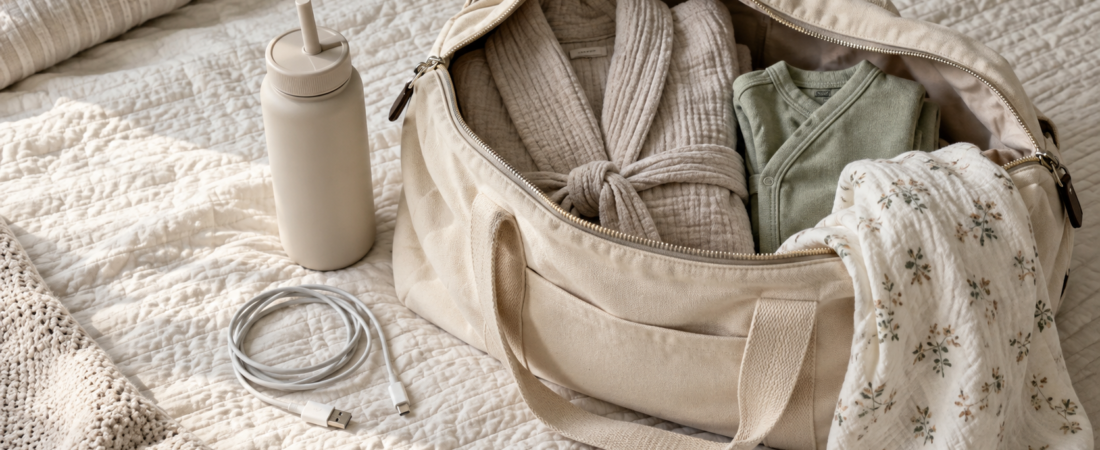
By Melinda Pattan, BSN, RN, IBCLC | Mom of Five
Quick Take
You do not need to pack your entire house to feel prepared for the hospital. After five babies of my own and years working as a Registered Nurse, I have learned that a simple hospital bag is usually the best hospital bag. Focus on a few comfort items for yourself, the basics your support person will need, a going-home outfit for baby, and a properly installed rear-facing car seat. Hospitals often provide many postpartum and newborn basics, but every facility is different, so call your labor and delivery unit before you pack.
Table of Contents
Introduction
Hey mama,
If you have found yourself staring at an empty suitcase while scrolling through hospital bag checklists that somehow contain 47 different things, this one is for you.
There is so much to think about in those final weeks of pregnancy. You are washing tiny clothes, preparing a nursery, thinking about labor, wondering what your baby will look like, and trying to make sure you have everything you could possibly need.
After having five babies of my own—and spending years working in the hospital as a Registered Nurse—I can tell you that you probably need far less than you think.
I have packed the overstuffed hospital bag. I have also learned which things actually get pulled out and which things simply take a round trip to the hospital.
The goal is not to pack the perfect hospital bag. It is to bring the things that make labor, postpartum recovery, feeding your baby, and those first hours together a little more comfortable.
One important note before we start: hospitals vary quite a bit in what they provide. Many provide basic postpartum supplies and newborn essentials during your stay, but I always recommend calling your own labor and delivery unit ahead of time and asking what will be available.
So, instead of another enormous “ultimate” checklist, here is what I would actually pack.
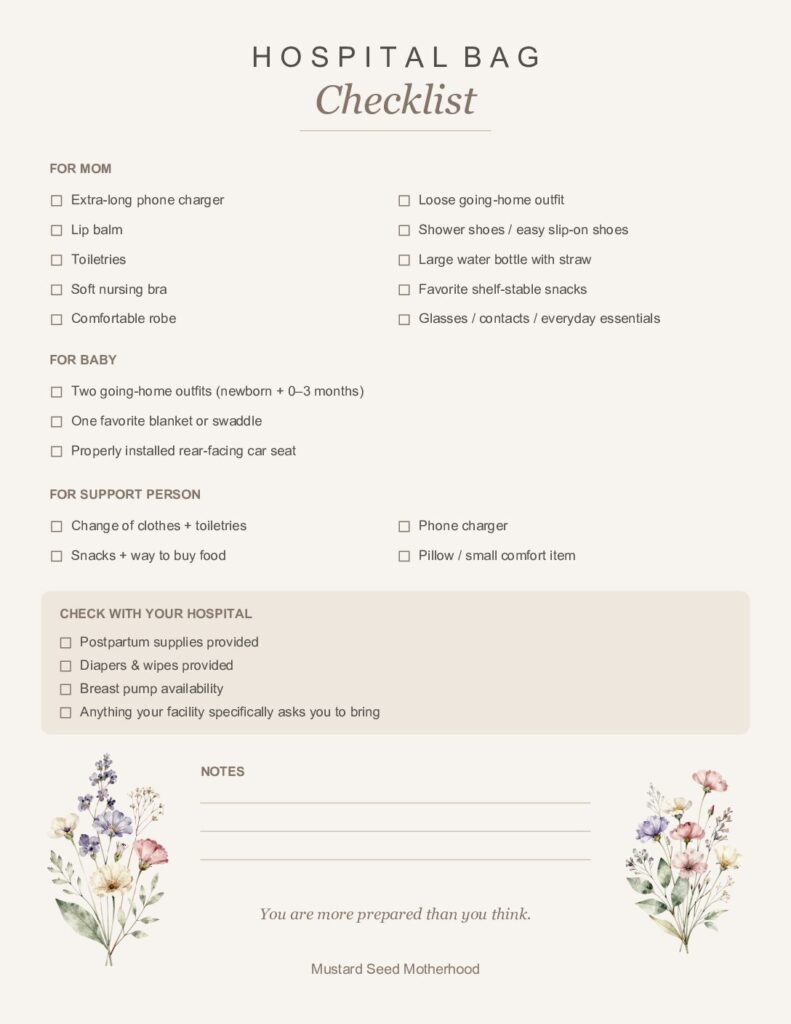
What I Actually Pack for Mom
1. An Extra-Long Phone Charger
This is one of those tiny things you will be very glad you packed. Hospital outlets are not always conveniently located beside the bed. Once you are settled in with monitors, an IV, a sleeping baby, or a breastfeeding session, the last thing you want is your phone charging across the room. I like an extra-long cord so your phone can stay within reach.
2. Lip Balm
Labor rooms can feel incredibly dry, and hours of breathing through contractions can leave your lips feeling even drier. Lip balm takes up almost no room and is one of those simple comfort items I would absolutely throw in my bag.
3. Your Own Toiletries
Pack the things that help you feel a little more like yourself: toothbrush, toothpaste, deodorant, face wash, hairbrush, hair ties, and your favorite shower products. The hospital may have basic toiletries, but there is something wonderful about taking that first shower after delivery and having your own familiar things.
4. A Soft Nursing Bra
If you plan to breastfeed, bring a comfortable nursing bra that gives you easy access for feeding and skin-to-skin. I would choose something soft and nonrestrictive rather than anything tight or heavily structured. Those first days are about comfort and easy access.
5. A Comfortable Robe
A comfortable robe is one thing I would absolutely pack. It makes skin-to-skin so easy—you can open it in the front to place baby directly against your chest while still feeling covered around your back and shoulders. It also gives you easy access for breastfeeding without having to completely undress every time your baby wants to nurse. Choose something soft, lightweight, and easy to wash.
6. Comfortable Clothes to Go Home In
This is not the time to pack your pre-pregnancy jeans. Your body has just done something incredible, and your abdomen will not immediately look or feel the way it did before pregnancy. Think loose, soft, stretchy, and easy to get on. A maternity outfit, loose dress, or soft pants and a roomy top are all great options.
7. Shower Shoes or Easy Slip-On Shoes
A simple pair of shower sandals or slip-on shoes is easy to pack and useful for walking around your room, heading to the bathroom, or taking that first postpartum shower. Choose something with good traction that you can get on without bending down and fussing with laces.
8. A Large Water Bottle With a Straw
Hydration matters during recovery, and a straw makes drinking one-handed much easier while you are holding or feeding your baby. Your hospital will have water, of course, but if you have a bottle you love and consistently use, bring it.
9. A Few Favorite Snacks
Hospital cafeterias and room service have hours. Babies do not. Bring a few shelf-stable snacks you genuinely enjoy for the odd hours when you suddenly realize you are starving. Your support person will appreciate this one too.
10. Glasses, Contacts, and Everyday Essentials
This sounds obvious until you are rushing out the door in labor. Add glasses, contacts and supplies, medications you have been instructed to bring, and other everyday essentials to a short last-minute list so they do not get forgotten.
What I Pack for Baby
This is where I think it is especially easy to overpack. Your newborn needs very little during the hospital stay, and many hospitals provide basic newborn supplies. Check with your facility first, then keep baby’s portion of the bag simple.
1. Two Going-Home Outfits in Different Sizes
I like bringing one newborn outfit and one 0–3 month outfit. You really do not know exactly how big your baby will be until they arrive, and two sizes take up almost no extra room. Choose something comfortable and appropriate for the weather.
2. One Blanket or Swaddle You Love
Your hospital will likely have blankets for use during the stay, but I still like bringing one of my own for pictures or the trip home. Keep it simple. Remember that loose blankets should not be placed around your baby while the car is moving; buckle baby into the car seat according to the manufacturer’s instructions.
3. A Properly Installed Rear-Facing Car Seat
This is the true essential. The American Academy of Pediatrics recommends that infants ride rear-facing from their first ride home and remain rear-facing until they reach the highest height or weight allowed by their car-seat manufacturer. Install the seat before labor if possible, and follow the manufacturer’s instructions carefully.
What Your Support Person Should Bring
Your support person needs a small bag too. Labor can be long and hospital stays are not always predictable, so a few basics can make the experience easier for everyone.
1. A Change of Clothes and Basic Toiletries
Comfortable clothes, a toothbrush, deodorant, and whatever they need for an overnight stay are plenty.
2. Snacks and a Way to Buy Food
Depending on the hospital and time of day, food options for support people may be limited. Pack snacks and make sure they have a card or some cash available for meals, vending machines, or coffee.
3. Their Own Phone Charger
Do not plan on sharing one charger. Your support person may be communicating with family, taking pictures, or keeping track of updates while your phone is beside you. Pack two chargers and save yourselves the argument.
4. A Pillow or Small Comfort Item
Hospital sleeper chairs are not exactly known for luxury. If space allows, a familiar pillow can make an overnight stay a little more tolerable. I would use a pillowcase that is easy to distinguish from hospital linens.
What I Would Leave at Home
After five babies, this may be my favorite part of the checklist: the things you probably do not need to pack.
A Huge Supply of Diapers and Wipes
Many hospitals provide diapers and wipes during your baby’s stay. Confirm with your own facility, but there is usually no reason to fill half your suitcase with them.
Your Entire Postpartum Bathroom Setup
Many hospitals provide basic postpartum supplies during the stay. Ask what your facility supplies and save your beautifully organized postpartum basket for home.
Five Outfits for Baby
Your newborn does not need a wardrobe change every few hours. A couple of going-home options are plenty for most families.
Valuable Jewelry
Leave anything expensive or deeply sentimental somewhere safe at home. Labor, procedures, room changes, and multiple bags are not an ideal combination for valuables.
Things You Are Packing Only Because Someone on the Internet Told You To
If you never wear a robe, you do not need to buy a special labor robe because it appeared on a checklist. If you do not care about having your own pillow, leave it home. Pack for you—not for a picture-perfect version of birth.
A Note About Breast Pumps
If you plan to breastfeed, you may be wondering whether your breast pump belongs in the hospital bag.
For most healthy mother-baby pairs who are breastfeeding directly, bringing a personal pump is not automatically necessary. If milk expression becomes medically indicated or you and your baby are unexpectedly separated, your hospital and lactation team can help you make a feeding and expression plan. Hospitals may have breast pumps available, and hand expression is also an important early skill.
If you specifically want help learning your personal pump before you go home, ask your hospital or lactation team whether they recommend bringing it. Your individual situation matters far more than a one-size-fits-all packing list.
Frequently Asked Questions
When should I pack my hospital bag?
ACOG recommends having your hospital bag packed and in a handy place as you prepare for labor. I personally like having the basics ready several weeks before the due date, with a small last-minute list for the things you still use every day.
Does the hospital provide diapers and postpartum supplies?
Many hospitals provide common newborn and postpartum basics, but what is supplied varies. Call your own labor and delivery unit before packing. This is one of the easiest ways to avoid bringing things you will never use.
How many outfits should I pack for my baby?
I would bring two simple going-home options in different sizes—one newborn and one 0–3 month. Your hospital may keep baby in a diaper and blanket or hospital clothing for much of the stay, depending on its practices.
Do I need to bring my breast pump?
Not necessarily. If you need to express milk, your care team can help determine what is appropriate. If you want instruction on your personal pump, ask your hospital or lactation team ahead of time whether they would like you to bring it.
What is the one thing I absolutely cannot forget?
For the ride home, a properly installed rear-facing car seat appropriate for your baby’s size is essential. The AAP recommends rear-facing travel beginning with baby’s first ride home.
My Favorite Hospital Bag Essentials
You absolutely do not need to buy a brand-new collection of products to have a good birth experience. But if you are still gathering a few practical items, these are the kinds of things I would prioritize: an extra-long phone charger, a soft nursing bra, a large water bottle with a straw, easy slip-on shoes, a simple toiletry bag, and a few favorite snacks.
Affiliate Disclosure
Disclosure: As an Amazon Associate, I may earn a small commission from qualifying purchases at no additional cost to you. I only recommend products I personally use, trust, or would confidently recommend to the families I care for.
Final Thoughts
You do not need the perfect hospital bag to be prepared for your baby.
Pack the things that make you comfortable, bring a few simple essentials for baby and your support person, and let your hospital provide the basics it already keeps on hand.
After five babies, I would choose a lighter bag and fewer things every single time.
The most important thing you are bringing home will not fit in the suitcase anyway.
You’ve got this, mama.
About the Author
Melinda Pattan, BSN, RN, IBCLC is a Registered Nurse, International Board Certified Lactation Consultant (IBCLC), Christian, and mother of five. Through The Mustard Seed Motherhood, she combines professional expertise with personal experience to provide evidence-based breastfeeding education, postpartum support, newborn care guidance, and faith-filled encouragement. Her mission is to help mothers feel informed, supported, and confident as they care for their babies.
Medical Disclaimer
The information provided on The Mustard Seed Motherhood is intended for educational and informational purposes only and should not be considered medical advice, diagnosis, or treatment. Every pregnancy, birth, mother, and baby are unique. Always follow the recommendations of your obstetric provider, pediatrician, hospital, IBCLC, or other qualified healthcare professional. Hospital policies and supplies vary, so contact your birth facility for its current recommendations and requirements.
References
• American College of Obstetricians and Gynecologists (ACOG). How to Tell When Labor Begins. Reviewed November 2025.
• American College of Obstetricians and Gynecologists (ACOG). Sample Birth Plan.
• American Academy of Pediatrics (AAP), HealthyChildren.org. Rear-Facing Car Seats for Infants & Toddlers.
• American Academy of Pediatrics (AAP), HealthyChildren.org. Bringing Baby Home: What to Do Before Leaving the Hospital.
• Centers for Disease Control and Prevention (CDC). Pumping Breast Milk. Updated February 24, 2026.
• Centers for Disease Control and Prevention (CDC). Hand Expression.
• Cleveland Clinic. What To Pack in Your Hospital Bag: A Labor and Delivery Checklist. June 11, 2026.
Related Articles
• 12 Healthy High-Protein Freezer Meals to Make Before Baby Arrives
• Motherhood Without a Village: How to Build Your Support System
• Signs of a Good Latch: How to Tell If Your Baby Is Breastfeeding Effectively