

By Melinda Pattan, BSN, RN, IBCLC | Mom of five
Quick Answer
Why won’t my newborn latch? It’s one of the most common questions new parents ask. If your newborn won’t latch, you’re not alone. Many babies need time, practice, and a little extra support to learn how to breastfeed. Common causes include sleepiness, positioning, milk flow, oral anatomy, or birth-related challenges. In this article, I’ll walk you through 10 common reasons your baby may not be latching and practical, evidence-based steps you can take to help.
Introduction
Many parents wonder, “Why won’t my newborn latch?” The answer is often more complex than a single cause. Few things are more discouraging than preparing to breastfeed your newborn only to have them refuse to latch. You may have imagined peaceful nursing sessions, but instead you’re met with tears, frustration, and countless questions.
“Why won’t my baby latch?”
If that’s where you are today, take a deep breath—you are not alone. Latch difficulties are one of the most common reasons families seek help from a lactation consultant, and many can be overcome with the right support and patience.
As an IBCLC, registered nurse, and mother of five, I’ve worked with many families navigating these challenges. The good news is that a baby who struggles to latch today does not necessarily mean breastfeeding won’t be successful tomorrow.
In this article, we’ll explore common reasons newborns struggle to latch, practical strategies that may help, and signs it’s time to seek additional support.
Table of Contents
Why Your Newborn Won’t Latch
Yes. Although breastfeeding is natural, it is also a learned skill for both mother and baby. Many newborns simply need time and practice to coordinate sucking, swallowing, and breathing. Birth circumstances, prematurity, positioning challenges, or oral anatomy can also contribute. Many latch issues improve significantly during the first several weeks with skin-to-skin contact, frequent opportunities to nurse, and guidance from an IBCLC. Allowing baby easy access to the breasts can help set them up for success with learning to latch and efficient milk removal.
Why a Good Latch Matters
A deep latch is about much more than comfort. When your baby latches deeply, the nipple reaches toward the soft palate, allowing the tongue and jaw to work together to remove milk efficiently. This protects your nipples while providing the stimulation your body needs to maintain a healthy milk supply.
By contrast, a shallow latch often places pressure directly on the nipple. This can lead to ongoing pain, damaged nipples, inefficient milk removal, longer feedings, and frustration for both mother and baby. Improving latch is often one of the most effective ways to improve the overall breastfeeding experience.
A deep, comfortable latch helps your baby transfer milk efficiently, protects your milk supply, and reduces nipple pain. A shallow latch can contribute to sore nipples, poor milk transfer, long feedings, slow weight gain, and decreased milk production over time.
• Effective milk transfer
• Better milk supply stimulation
• Greater comfort for mom
• More satisfying feeds for baby
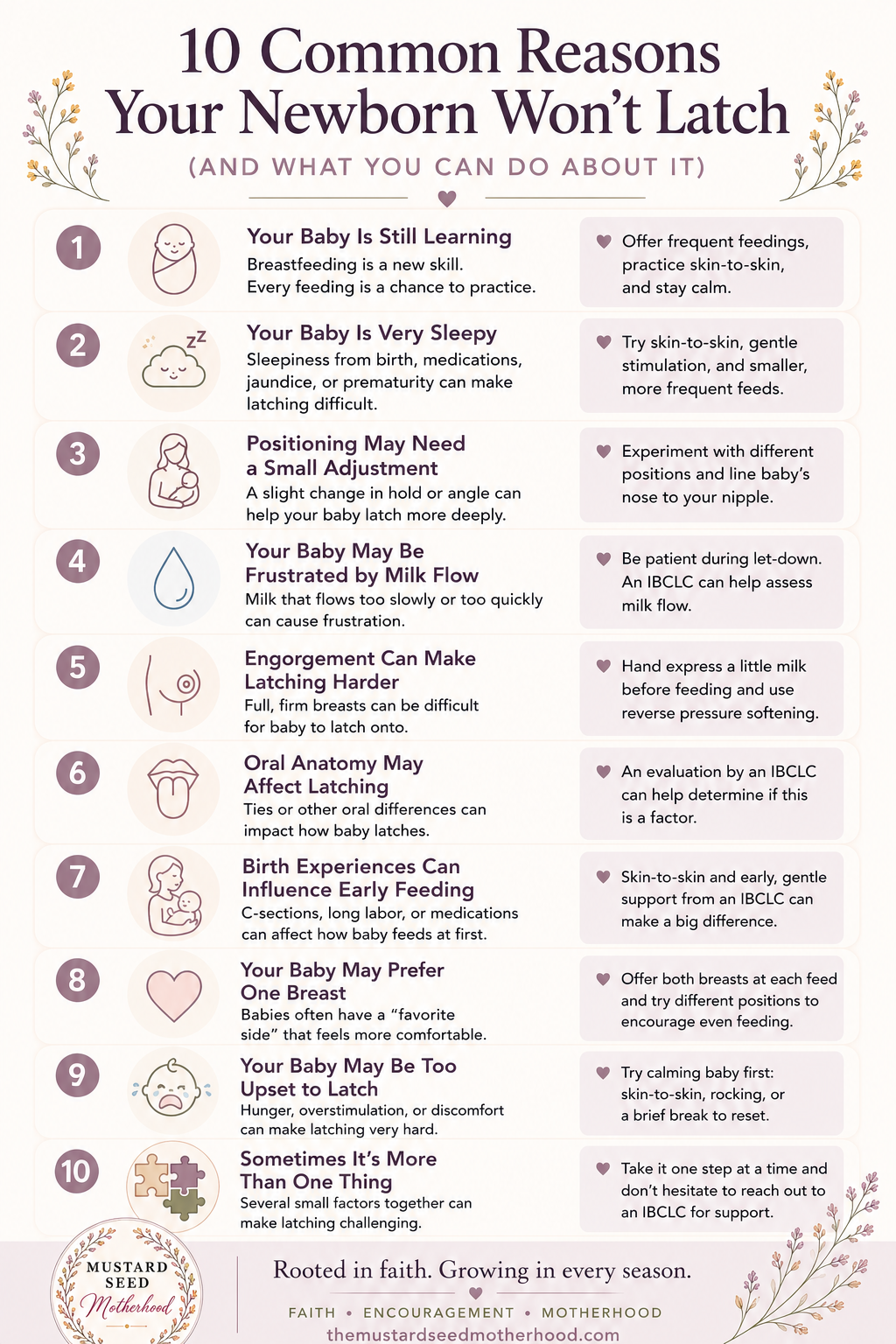
10 Common Reasons Your Newborn Won’t Latch
Not every baby refuses to latch for the same reason. Sometimes there is one clear cause, while other times several factors work together. If you’ve been asking yourself, “Why won’t my newborn latch?”, these are the ten most common reasons I see as an IBCLC.
1. Your Baby Is Still Learning
The most common explanation is also the simplest: your newborn is learning a brand-new skill. Every feeding is another opportunity to practice. Offer the breast frequently while gently supporting a deep, comfortable latch. Did you know that babies are born with feeding reflexes? Depending on their birth journey, they may need assistance learning to utilize the feeding reflexes they were born with.
• Offer frequent feeding opportunities.
• Practice skin-to-skin contact.
• Stay calm and avoid forcing the latch.
2. Your Baby Is Very Sleepy
During the first 24–48 hours, many newborns are especially sleepy. Labor medications, jaundice, prematurity, or a difficult birth can make this more noticeable. Essentially, your baby just ran the marathon of their lives, while it’s still important to offer feedings every 2-3 hours, some sleepiness is normal in the first few days.
• Fall asleep shortly after latching.
• Latch only briefly.
• Show little interest in feeding.
If your baby is consistently too sleepy to feed effectively, contact your pediatrician or IBCLC for guidance while protecting your milk supply.
3. Positioning May Need a Small Adjustment
Sometimes a baby is willing to breastfeed but simply can’t find a comfortable position to latch deeply.
Many parents find success by experimenting with different breastfeeding positions, including:
• Cross-cradle hold
• Football hold
• Side-lying position
• Laid-back (biological nurturing) position
As a starting point, aim to line your baby up with their nose to your nipple. Their chin should touch your breast first, which helps encourage a wide gape. A deep latch allows your baby to take in more of the areola—not just the nipple. If breastfeeding is painful throughout the feeding or your nipples appear flattened, pinched, or creased afterward, it may be a sign that your baby’s latch needs adjustment.
4. Your Baby May Be Frustrated by Milk Flow
Some babies become frustrated when milk flows more slowly—or too quickly—than they expect.
• Your milk is still transitioning from colostrum to mature milk.
• Your baby has received bottles with a faster flow.
• Your baby becomes upset before let-down occurs.
If your baby frequently coughs, sputters, or pulls away shortly after latching, an overactive let-down may also contribute. An IBCLC can help determine whether milk flow is part of the challenge.
5. Engorgement Can Make Latching More Difficult
As your milk comes in, your breasts may become very full and firm. Severe engorgement can make it difficult for your baby to latch deeply.
• Hand express a small amount of milk before feeding.
• Use reverse pressure softening around the nipple.
• Feed frequently and on demand as your baby shows early feeding cues.
6. Oral Anatomy May Affect Latching
Some babies experience latch difficulties because of differences in their oral anatomy, such as tongue mobility restrictions, a high-arched palate, tight jaw muscles, or other structural differences. A complete feeding assessment by an IBCLC or pediatric provider is the best way to determine whether oral anatomy is a contributing factor. If you have any concerns or suspicions about oral restrictions, it is best to schedule a feeding assessment.

7. Birth Experiences Can Influence Early Feeding
A long labor, cesarean birth, medical complications, or separation after delivery can temporarily affect early breastfeeding. Many babies simply need additional skin-to-skin contact, patience, and repeated opportunities to nurse while recovering.
8. Your Baby May Prefer One Breast
Some newborns latch well on one breast but become frustrated on the other. While this can be concerning, it’s actually more common than many parents realize.
A baby may prefer one side because of:
• A preferred head position
• Neck tightness or muscle tension after birth
• Differences in your milk flow between breasts
• A position that simply feels more comfortable
If your baby consistently refuses one breast, try offering that side in a different breastfeeding position or beginning the feeding on the breast they prefer before gently switching sides once milk is flowing.
If your baby continues refusing one breast over multiple feedings, an IBCLC or your pediatrician can help determine whether additional evaluation is appropriate.
9. Your Baby May Be Too Upset to Latch
A baby who is very hungry or crying intensely often has a much harder time coordinating a latch.
When babies become upset, they may arch away from the breast, cry, or repeatedly push off instead of feeding.
Before offering the breast, it may help to spend a few minutes calming your baby by:
• Holding your baby skin-to-skin
• Gently rocking or swaying
• Speaking softly
• Offering a clean finger briefly to help organize sucking, if appropriate
• Watching for early hunger cues and offering the breast before crying begins
Remember, crying is actually a late hunger cue. Many babies latch more easily when they are offered the breast during the earlier stages of hunger, such as rooting, bringing their hands to their mouth, or becoming more alert.
10. Sometimes It’s More Than One Thing
One of the most important things I’ve learned as an IBCLC is that breastfeeding challenges are rarely caused by a single issue.
For example, a baby recovering from a long delivery may also be sleepy, while a mother is experiencing engorgement and both are still learning how to breastfeed. Each factor alone may seem small, but together they can make latching much more difficult.
This is why a comprehensive breastfeeding assessment is so valuable. Rather than looking for one simple explanation, an IBCLC evaluates the entire feeding relationship—including your baby’s feeding behaviors, milk transfer, weight gain, your comfort, and your breastfeeding goals—to create a personalized plan.
Most importantly, remember this:
A difficult beginning does not predict the rest of your breastfeeding journey.
Many families who struggle with latching during the first days or weeks go on to enjoy a successful and rewarding breastfeeding relationship with the right support.
What You Can Try at Home
Try creating a calm feeding environment whenever possible. Dim lights, reduce distractions, and spend several minutes holding your baby skin-to-skin before attempting to latch. Babies often feed more effectively when they feel calm and secure.
Remember that forcing your baby’s head onto the breast usually makes latching more difficult. Instead, support your baby’s shoulders and allow them to tilt their head back slightly and open their mouth wide before bringing them onto the breast. Small improvements over several days are completely normal.
Pay attention to diaper counts, swallowing, and your baby’s overall contentment after feedings. These signs often provide a better picture of breastfeeding progress than the length of an individual feeding.
If your newborn is struggling to latch, these gentle strategies may help while you continue working with your healthcare team.
• Spend plenty of time skin-to-skin.
• Watch for early hunger cues before crying begins.
• Offer the breast frequently and on demand.
• Stay patient—every successful latch is progress.
When Should You Seek Help?
Early support frequently prevents small breastfeeding challenges from becoming larger ones. Many families wait because they hope things will improve on their own, but an early assessment can often identify simple adjustments that make a dramatic difference.
You should also seek guidance if feedings consistently last longer than an hour without your baby appearing satisfied, if your nipples continue to worsen despite latch adjustments, or if breastfeeding has become so painful that you dread feeding your baby. An individualized feeding assessment allows recommendations to be tailored to your specific situation.
While many latch difficulties improve with time and support, some situations deserve prompt evaluation. Contact your baby’s pediatrician and an International Board Certified Lactation Consultant (IBCLC) if your baby:
• Has fewer wet or dirty diapers than expected for age.
• Continues to struggle latching despite repeated attempts.
• Seems excessively sleepy or difficult to wake for feeds.
• Is not gaining weight appropriately or continues losing weight beyond expected newborn patterns.
• Shows signs of dehydration, including a dry mouth or decreased urine output.
• Breastfeeding is consistently painful or your nipples are cracked or bleeding.
Remember—This Is Not Your Fault
Breastfeeding challenges can feel deeply personal, but difficulty latching does not mean you’ve failed. Every mother and every baby are different. Some breastfeeding journeys begin smoothly, while others require additional time, patience, and support. I will never forget the feeling of my fourth baby refusing the breast. I felt like he was rejecting me and as though I was failing him. After a lot of patience and support, we went on to breastfeed for a little over two years.
With the right evaluation and individualized guidance, many families overcome early latch challenges and go on to have a positive breastfeeding experience.
Final Thoughts
Breastfeeding is a relationship that both you and your baby are learning together. Some families find their rhythm within the first few days, while others need several weeks before feeding becomes comfortable and predictable. Neither experience reflects your worth as a mother.
Celebrate small victories. A slightly deeper latch, one less painful feeding, or a baby who stays at the breast a little longer are all meaningful signs of progress. With patience, support, and evidence-based guidance, many early breastfeeding challenges can be overcome.
A baby who won’t latch can leave you feeling discouraged, but remember that today does not define your entire breastfeeding journey. Keep offering opportunities to breastfeed, spend time skin-to-skin, and don’t hesitate to seek help when you need it.
As an IBCLC, registered nurse, and mom of five, I’ve seen countless families move from tears and uncertainty to confidence. Asking for help is not a sign of failure—it’s one of the best investments you can make in your breastfeeding relationship.
🌿 Affiliate Disclosure
This article may contain affiliate links. As an Amazon Associate, I earn from qualifying purchases at no additional cost to you. I only recommend products I personally use, trust, or would confidently recommend to my own patients, friends, and family. Thank you for supporting The Mustard Seed Motherhood.
Products That May Help
The following products are ones I personally use, trust, or frequently recommend as an IBCLC and Registered Nurse. Every family is different, so not every product is necessary for every situation.
🌿 View my complete Breastfeeding Essentials on my Amazon storefront.
If You Found This Article Helpful, You May Also Enjoy
• How to Know if Your Baby Is Getting Enough Milk
• How to Increase Your Breast Milk Supply Naturally (Coming Soon)
• Signs of a Deep vs. Shallow Latch
• Breastfeeding Positions Every New Mom Should Know (Coming Soon)
About the Author
Melinda Pattan, BSN, RN, IBCLC is a NICU nurse, International Board Certified Lactation Consultant (IBCLC), and mother of five. Through The Mustard Seed Motherhood, she shares evidence-based breastfeeding education, postpartum support, newborn care guidance, and faith-filled encouragement to help mothers navigate the early years of motherhood with confidence.
Enjoyed this article? Join the Mustard Seed Motherhood community for practical breastfeeding tips, postpartum encouragement, and trusted resources delivered straight to your inbox.
References
• American Academy of Pediatrics. (2022). Breastfeeding and the Use of Human Milk.
• World Health Organization. Infant and Young Child Feeding.
• La Leche League International. Positioning and Latching.
Medical Disclaimer
The information provided on The Mustard Seed Motherhood is for educational purposes only and is not intended to replace medical advice, diagnosis, or treatment. Every mother and baby are unique. Always consult your pediatrician, obstetric provider, IBCLC, or other qualified healthcare professional regarding concerns about breastfeeding, infant feeding, or your child’s health. Never delay seeking professional medical care because of information you have read on this website. When in doubt, reach out.
Last Reviewed
Last reviewed: July 2026
Written by: Melinda Pattan, RN, BSN, IBCLC
This article reflects current evidence and clinical recommendations available at the time of publication. Articles are periodically reviewed and updated to ensure information remains accurate and helpful for families.